

What does it mean if a root-filled tooth starts hurting again weeks later: is this still part of the healing process, or should it be examined? If you have pain again weeks after a root canal treatment, you will usually want to know whether the way things are developing calls for a check-up. Symptoms can vary from person to person. What matters is therefore not only how strong the pain is, but also whether it is easing, coming back or getting worse, and whether other changes appear.
Persistent or new pain can have different causes. These include renewed inflammation or a problem with the restoration of the tooth. Which explanation applies in an individual case cannot be determined remotely.
In this article you will learn which reasons may lie behind later discomfort, which warning signs to look out for and when a dental check-up makes sense. We also explain what can be clarified during an examination. Dental11 in Zürich Enge near Sihlcity offers root canal treatments and appointments for acute dental problems.
Key points
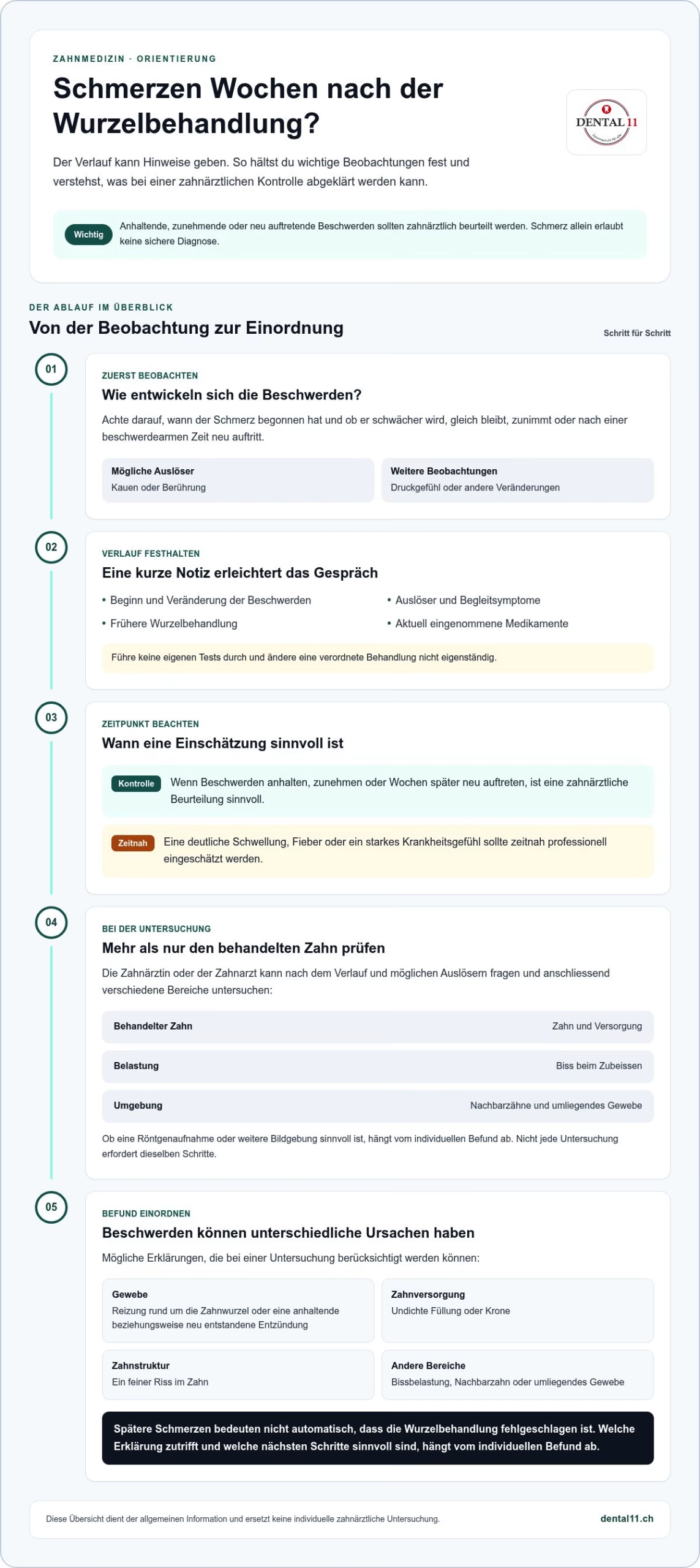
- Note when your symptoms occur and how they change. A feeling of pressure and other symptoms can also help with the assessment.
- If you have pain weeks after a root canal treatment, its strength is not the only thing that counts: persistent, increasing or new symptoms should be assessed by a dentist.
- At a check-up, the bite, neighbouring teeth and the surrounding tissue can be examined as well as the treated tooth.
- Which next steps make sense depends on the individual findings. Dental11 in Zürich Enge offers root canal treatments and appointments for acute dental problems.
Pain weeks after a root canal treatment: what does the course of symptoms mean?
Later discomfort refers to pain or a feeling of pressure that is still present, or appears for the first time, weeks after a root canal treatment. Pay attention to when the symptoms occur and how they change. The article on root canal treatment gives a general overview of the procedure. It cannot, however, explain what lies behind a particular sensation in an individual case.
Pressure when chewing, sensitivity to touch and pain that occurs spontaneously are different observations. Are the symptoms becoming weaker, staying the same or getting worse? With pain that only appears weeks after a root canal treatment, duration and intensity alone do not allow a reliable diagnosis. The course of the symptoms can provide clues, but only a dental examination allows an individual assessment.
Which observations are important for the assessment?
Note when the pain started and whether it is changing. Pay attention to whether chewing or touch triggers discomfort and whether other changes appear. This information helps you describe the course clearly at a check-up. However, neither a general healing time nor the cause can be reliably derived from a single symptom or a particular duration.
Why symptoms do not automatically mean the treatment has failed
Later discomfort can have various causes, including some that are not directly related to the root canal treatment. Without an examination, it remains unclear what lies behind it in an individual case. Pain therefore does not automatically mean that the treatment has failed. A dental assessment can help put the situation into context. You can find more information in our guide to modern root canal treatment with a microscope in Zurich.
Possible causes of toothache weeks after a root canal treatment
Pain weeks after a root canal treatment can have various reasons. It is possible, for example, that the tissue around the root of the tooth is still irritated. Persistent or newly developed inflammation, a leaking filling or crown, or a fine crack in the tooth can also cause symptoms. These possibilities are not a remote diagnosis: similar symptoms can have different causes.
A specialist overview of possible problems is provided in the article on possible complications after a root canal treatment. However, it does not tell you what is happening with an individual tooth. Pain that appears later does not automatically mean renewed inflammation, nor does it mean a treatment error.
Treated tooth, neighbouring tooth or surrounding tissue?
The place where you feel the pain does not always show clearly which tooth or tissue is the cause. Discomfort can also come from a neighbouring tooth or the surrounding area. Your bite can play a role too, for example if the treated tooth takes more load when you bite down. A dental examination helps narrow down the affected area.
What an examination can clarify
At the start, the dentist may ask about the course of your symptoms, possible triggers and the treatment so far. The tooth, the bite, neighbouring teeth and the surrounding tissue can then be examined clinically. Whether an X-ray or further imaging is useful depends on the individual findings. Not every examination requires the same steps.
If the stability or restoration of the tooth becomes an issue, you can find more information on crowns and fillings in Zurich. A dental check-up makes it possible to discuss your symptoms and possible next steps on the basis of the findings.
When should you have pain after a root canal treatment checked?
If symptoms persist, get worse or appear again after a period with little discomfort, a dental assessment makes sense. This also applies to pain weeks after a root canal treatment: how the symptoms develop over time can give important clues, but it does not replace an examination. Record changes and accompanying symptoms factually, without drawing your own conclusions about the cause.
What information helps at the appointment?
A short note can make the conversation easier. Mention when the symptoms began, whether they are getting stronger or weaker and whether chewing or touch, for example, triggers them. Also note any other changes. Tell the practice about the earlier root canal treatment and about any medication you are currently taking. Do not carry out your own tests and do not change a prescribed treatment on your own.
When is a prompt assessment important?
Marked swelling, fever or feeling very unwell should be assessed by a professional promptly. If you are unsure how quickly you should get in touch, a dental practice can also help you assess your situation. General information can help, but it does not replace an individual examination.
To prepare for a check-up:
- Note when the symptoms began and how they have developed.
- Record possible triggers and accompanying symptoms.
- Mention the earlier treatment and any current medication.
- If symptoms get worse, or if you have marked swelling, fever or feel very unwell, contact a practice promptly.
Dental11 in Zürich Enge offers appointments for acute dental problems. If your symptoms persist or appear again, a dental check-up can help assess them individually.
Pain after a root canal treatment in Zurich: what happens next
At a personal assessment, the first step is to discuss when the symptoms started, how they have changed and whether you have noticed particular triggers or accompanying symptoms. The dentist can then examine the treated tooth and the surrounding area. Depending on the findings, further examinations may be useful. Which steps come into question can only be judged after this individual assessment.
What can be discussed at the check-up?
You can ask questions about the course of your treatment so far and have the results of the examination explained to you. If further measures are being considered, their possible benefits, limits and risks, as well as suitable alternatives, should be discussed in a way you can understand. Whether a treatment is necessary or suitable depends on your findings and your personal needs.
Dental11 in Zürich Enge near Sihlcity offers root canal treatments and appointments for acute dental problems. The practice is located in Zurich’s District 2 and serves patients from Enge, Wollishofen, Wiedikon, Zurich South, Leimbach, Brunaupark, Giesshübel and Adliswil. The costs can also only be estimated on the basis of your situation: they depend, among other things, on the findings, the complexity and the measures required. Before any treatment, the practice can explain which steps are planned and what costs may arise.
What to take away from this guide
Pain weeks after a root canal treatment is not automatically normal, but it is not proof of a treatment error either. If symptoms persist or change, a personal dental assessment can help you understand the situation better.
If you would like your symptoms examined, you can make an appointment for a dental assessment at Dental11 in Zürich Enge.
Clarity through a personal dental assessment
The question of pain weeks after a root canal treatment has no general answer. Symptoms can have different causes, and neither their duration nor their strength alone reliably shows what lies behind them. What counts is the course of the symptoms, any accompanying symptoms and a dental examination.
If pain persists, gets worse or appears again, a check-up can help assess the situation individually. Note when the symptoms started and what triggers them. This makes the conversation easier, but it does not replace an examination. If you have marked swelling, fever or feel very unwell, you should seek a professional assessment promptly.
Dental11 in Zürich Enge offers root canal treatments and appointments for acute dental problems. If you would like clarity about your symptoms, book an appointment for an individual assessment in Zürich Enge. At the examination, the next step can be discussed on the basis of your findings.
Frequently asked questions about pain after a root canal treatment
Is it normal to have pain weeks after a root canal treatment?
There is no general answer to this. Whether pain weeks after a root canal treatment is consistent with your individual course of healing does not depend on its duration alone. It also matters whether it is easing, staying the same or getting worse, what triggers it and whether other symptoms appear. If the pain persists, gets worse or appears again, it makes sense to have it assessed by a dentist. This general information does not replace an examination.
Why does a root-filled tooth still hurt weeks later?
There are several possible causes. The discomfort may come from the treated tooth, from the surrounding tissue or from a neighbouring tooth. The place where you feel the pain does not always show clearly where it comes from. A dentist therefore assesses the course of your symptoms and the clinical findings rather than deriving the cause from your description alone. Only an individual examination can point to suitable next steps.
When should I see a dentist about pain after a root canal treatment?
Have your symptoms assessed by a dentist if they persist, get worse or appear again after a period with less discomfort. Marked swelling, fever or feeling very unwell should be assessed by a professional promptly. How soon a check-up is needed depends on your individual situation. If you are unsure, contact a dental practice. General information cannot replace a personal examination.
Can a root-filled tooth become inflamed again?
This cannot be determined reliably from pain alone. Renewed inflammation is one possible explanation, but symptoms can also have other causes. At a check-up, the dentist assesses the treated tooth and the surrounding areas. Depending on the findings, further examinations may be useful. Which options come into question afterwards can only be discussed on the basis of your individual findings.
What happens at a check-up for pain that appears later?
First, your symptoms and the course of your previous treatment are discussed. The dentist then examines the tooth and the surrounding areas. Whether additional examinations are useful depends on the findings. Possible next steps, their limits and alternatives can then be explained. Dental11 in Zürich Enge near Sihlcity assesses each situation individually.
This article is for general information only and does not replace a personal dental examination.