Occlusal splint in Zurich Enge
Splint for Teeth Grinding
Many people grind or clench their teeth, usually at night and without noticing. Over time this wears down the teeth and can strain the chewing muscles and jaw joints. A custom-made splint protects the teeth and distributes the forces more evenly.
Consultation
Free
Findings, options and questions
Cost of treatment
After assessment
estimated individually and explained in advance
Wearing time
At night
or as agreed
The cost depends on your personal situation and can only be estimated after an examination in the practice. The consultation is free. Before treatment begins we explain the expected cost to you, verbally or as a written cost estimate.
Possible signs of teeth grinding
- flattened, worn or chipped incisal edges and cusps
- tense or painful chewing muscles in the morning
- headaches in the temple area after waking up
- sensitive teeth without visible decay
- grinding noises at night that others notice
- fillings or crowns that chip repeatedly
What a splint can and cannot do
The splint protects teeth, fillings and crowns from further wear and can relieve the chewing muscles. It does not remove the cause of the grinding. Stress and tension often play a part. That is why we also discuss what you can do in everyday life.
Custom-made
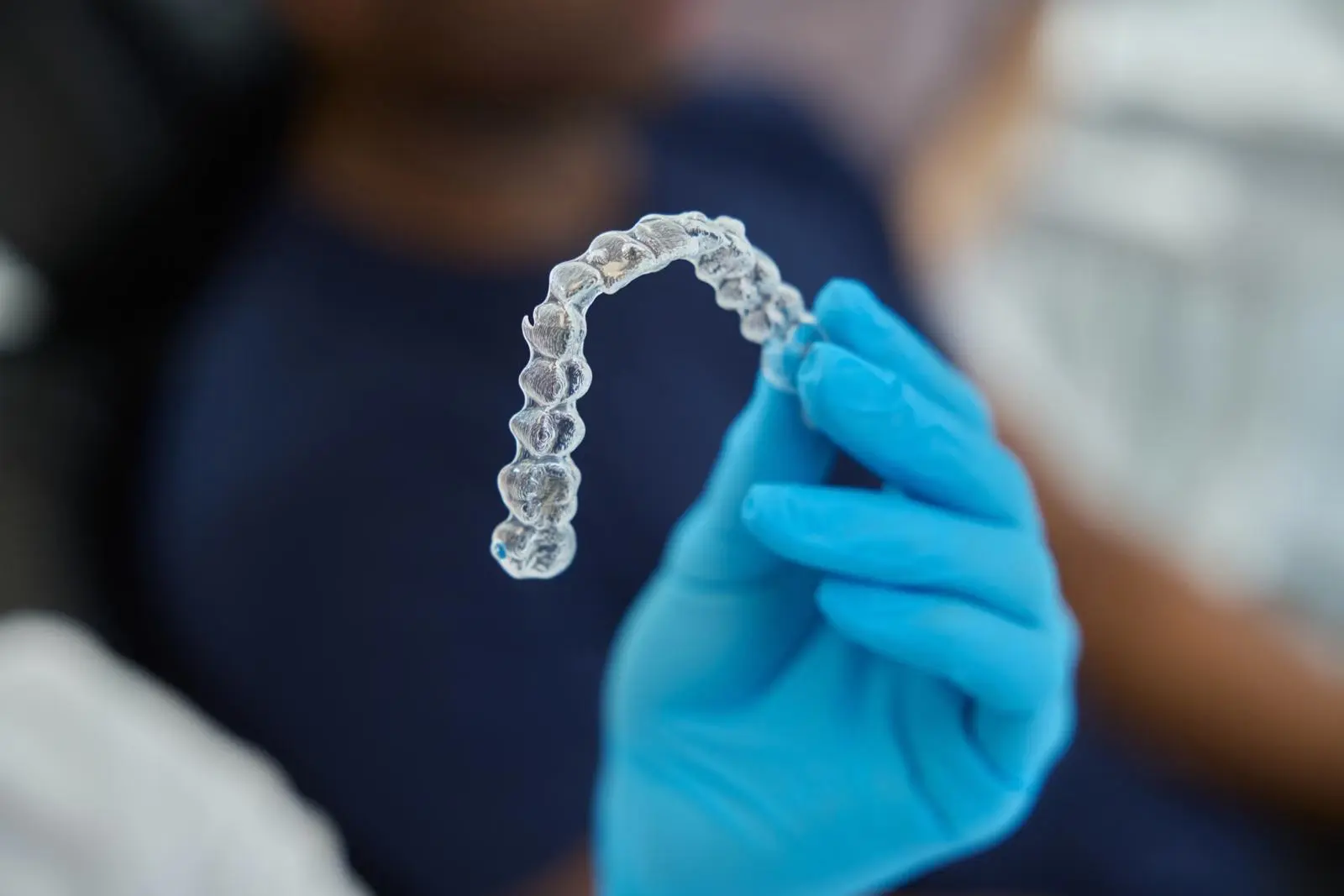
The splint is made from an impression of your teeth and adjusted to your bite when it is fitted. It is made of transparent plastic and is usually worn in the upper or the lower jaw. A precisely fitting splint is the prerequisite for it being comfortable and for the bite not changing.
Care and check-ups
- clean after wearing with a toothbrush and cold or lukewarm water
- do not use hot water, the plastic can deform
- store dry and ventilated in the box
- bring it to your check-up so that fit and wear can be checked
Process
Step by step
Examination of teeth, chewing muscles and jaw joints
Discussion of the findings and the cost
Impression of the teeth
Fitting of the splint and adjustment to the bite
Check after the first weeks of wearing
FAQ
Questions about Splint for Teeth Grinding
Does the grinding stop with the splint?
Not necessarily. The splint protects the teeth from the consequences, while the grinding itself can continue. In some people the muscle tension eases with the splint.
How long does a splint last?
That depends on how heavily you grind. The splint wears down in place of your teeth, that is its purpose. At the check-ups we see whether it still fits or should be replaced.
Is it difficult to get used to the splint?
In the first nights the splint feels unfamiliar, and the flow of saliva can be stronger. Most people get used to it within a short time. If the splint presses or your bite no longer feels right in the morning, please contact us.
Is a ready-made splint from the pharmacy or the internet enough?
Ready-made splints are not matched to your bite. They can fit poorly and, with prolonged use, strain the tooth position or the jaw joint. For long-term use we recommend a custom-made splint.
Does health insurance cover the cost?
Basic insurance usually does not cover splints for teeth grinding. Some supplementary policies contribute. Please check directly with your insurer.
Ready for the next step?
Book online any time or by phone during opening hours, Mondays and Tuesdays until 20:00.