What if not every tooth discolouration becomes lighter with bleaching? Whether in-office bleaching suits your teeth depends, among other things, on the cause of the discolouration and the health of your teeth. If you are looking into in-office bleaching in Zurich, it is therefore worth looking beyond the possible whitening effect and understanding the requirements and limits as well.
In this article you will learn what tooth whitening at the practice can achieve and which questions a dental assessment can answer. These include possible side effects such as temporary tooth sensitivity or irritated gums. Also important: fillings, crowns and veneers do not change colour with bleaching in the way natural teeth do. You will find guidance on possible alternatives and on the points you can discuss before making a decision. Whether a treatment is suitable can only be assessed on the basis of your oral health and the clinical findings.
Key takeaways
- A dental assessment helps to put requirements, expectations and possible limits into context before bleaching.
- With in-office bleaching, you should consider not only the shade you would like but also possible sensitivity and any existing dental restorations.
- In-office bleaching and its alternatives have different aims. Which option suits you depends on your concerns and the clinical findings.
- At Dental11 in Zürich Enge, you can discuss your wishes, possible reactions and suitable next steps.
In-office bleaching in Zurich: what the treatment can and cannot do
In-office bleaching is a professional tooth whitening treatment carried out at a dental practice. The aim is to lighten the natural colour of your teeth. A general overview of in-office bleaching explains the procedure; whether it is an option for you, however, depends on the cause of the discolouration and the condition of your teeth. Existing restorations can also affect the overall appearance.
Fillings, crowns and veneers do not lighten with bleaching in the way natural teeth do. If they are in a visible area, a difference in colour may be noticeable after treatment. It is therefore a good idea to mention existing restorations beforehand, so that they are taken into account when estimating the possible result.
Who may be suited to in-office bleaching?
Whether in-office bleaching is suitable cannot be judged from the desired shade alone. What matters is your oral health, the clinical findings and the cause of the discolouration. Different types of discolouration can respond differently to whitening. Fillings, crowns or veneers also do not change colour in the way natural teeth do and can affect the overall result that is achievable. During the assessment, you can talk about the result you would like, any known sensitivity and any open questions.
What expectations are realistic?
Tooth whitening can change the natural colour of your teeth, but it does not promise a particular level of brightness or a uniform shade. How long the whitening lasts cannot be predicted in general terms either. A realistic goal takes into account your starting shade, the type of discolouration and any restorations. For this reason, do not judge the possibilities on the basis of a before-and-after picture alone.
The suitability and result of in-office bleaching depend on the natural colour of your teeth and the clinical findings. If you are considering in-office bleaching, you can discuss these points specifically during a personal assessment. General information does not replace an individual dental examination.
Is in-office bleaching harmful? Side effects and limits explained
Tooth whitening at the practice can cause temporary tooth sensitivity or irritation of the gums. How strong such reactions are and how long they last varies from person to person. The American Dental Association's information on tooth whitening also describes these possible side effects. Bleaching should therefore not be regarded as risk-free. An examination and clear information help you weigh up the possible benefits and limits in your own case.
Why can teeth become sensitive after bleaching?
After bleaching, teeth can for a time react more sensitively to cold or other stimuli. The gums may also be irritated. Duration and intensity vary from person to person. Let your dentist know if you already have symptoms or known sensitivity. If symptoms appear after treatment or persist, an individual dental assessment is advisable.
When is a prior assessment particularly important?
Mention during the examination if you suspect tooth decay, have gum problems or notice discomfort in individual teeth. This information helps to assess your situation, but it does not replace an examination. Please also mention fillings, crowns or veneers, as they behave differently from natural teeth during bleaching. The dental assessment takes into account the condition of your teeth and gums as well as your wishes before any treatment is recommended.
Bleaching can lighten the natural colour of your teeth, but it is neither risk-free nor predictable in the long term. If you have questions about in-office bleaching, you can discuss symptoms, expectations and possible alternatives in person. To do so, book an appointment for a dental assessment.
In-office bleaching or an alternative: how to compare your options
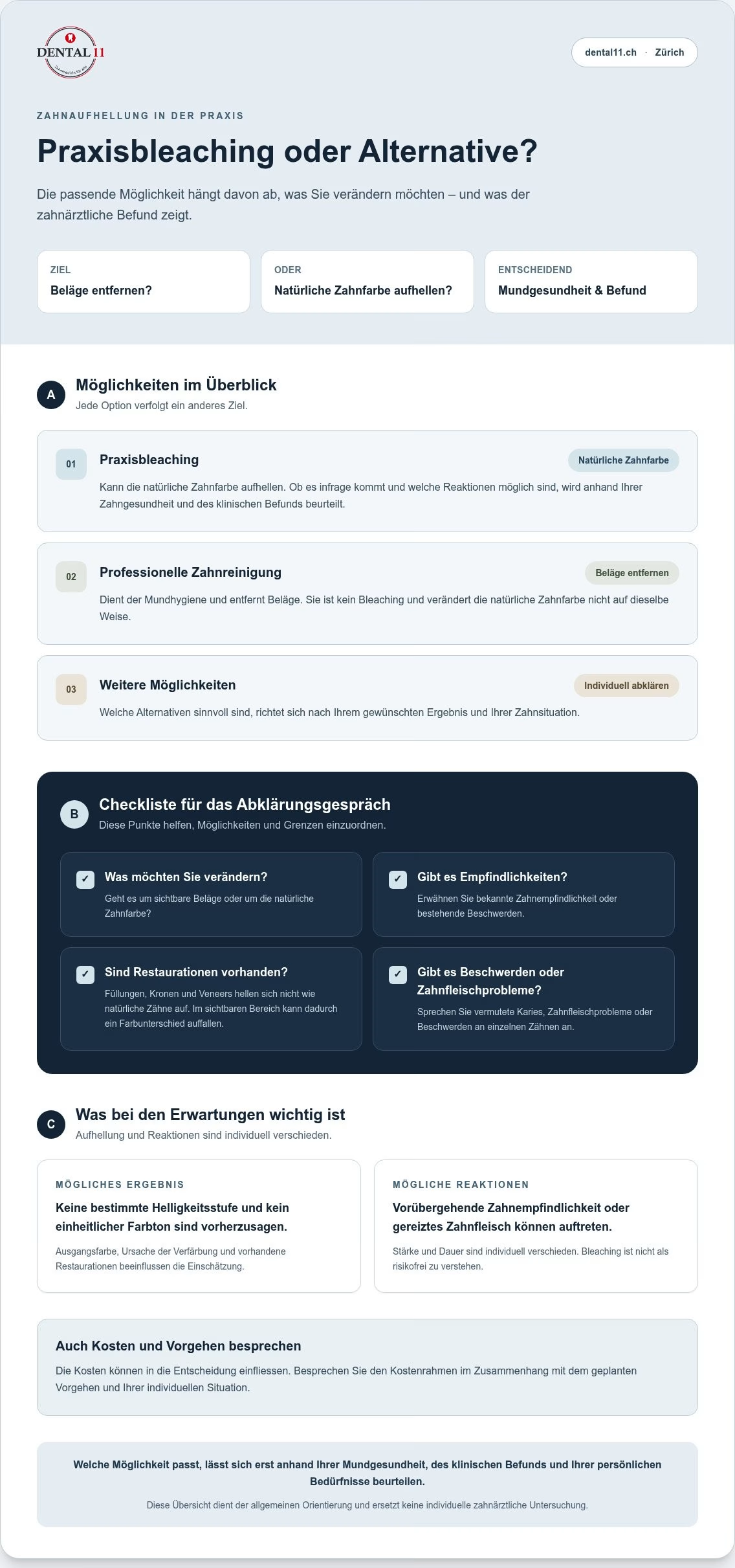
Which option suits you depends on what you would like to change and what your teeth need. Compare the options on the basis of your goal, the dental findings, possible sensitivity and existing restorations. Costs can also play a part in the decision. Discuss the cost range in connection with the planned approach and your individual situation.
- In-office bleaching: Can lighten the natural colour of your teeth. Whether it is an option and what reactions are possible is assessed on the basis of the clinical findings.
- Dental cleaning: Supports oral hygiene and removes deposits. It is not bleaching and does not change the natural colour of your teeth in the same way.
- Other options: Which alternatives make sense depends on the result you would like and your individual dental situation.
Which questions help with the comparison?
First consider whether you would like to have deposits removed or the natural colour of your teeth lightened. Note whether you know you have sensitive teeth and whether you have fillings, crowns or veneers. This information makes the conversation easier. A professional assessment can clarify which options fit your findings and your personal needs.
For visible deposits or external staining, a professional dental cleaning can be a different approach. However, it does not have the same aim as bleaching. You can find out more about oral hygiene in the checklist on dental cleaning before bleaching in Zurich and in the guide to dental hygiene in Zurich.
When are veneers not an equivalent alternative to bleaching?
Veneers are a separate restorative option and not another form of tooth whitening. Whether they are an option for a particular change has to be assessed individually. They are not automatically the right alternative if bleaching does not achieve the desired goal. The guide to veneers in Zurich offers additional guidance.
If you are considering in-office bleaching, you can discuss your goal, the findings and possible alternatives during a dental assessment. Book an appointment for a bleaching assessment to look at your options in person.
In-office bleaching at Dental11 in Zurich: assessment and next steps
Would you like to consider tooth whitening and find out whether it suits your dental situation? Dental11 is a dental practice in Zürich Enge and offers bleaching. Bleaching with us costs CHF 299 (regular price CHF 499). During a personal assessment, your wishes and the clinical findings can be discussed together. If you are looking for in-office bleaching in Zurich, the location in Zürich Enge, a few minutes' walk from Sihlcity, may also be convenient for people from Zurich Kreis 2, Wollishofen, Wiedikon, Zurich South, Leimbach, Brunaupark, Giesshübel and Adliswil.
What can be discussed during a personal bleaching assessment
During the assessment, the natural colour of your teeth, the condition of your teeth and gums and any existing fillings, crowns or veneers can be taken into account. Please also tell us what result you have in mind and whether you have noticed sensitive teeth or other symptoms. This way, expectations, possible reactions and alternatives can be related to your situation.
The appropriate approach depends on the clinical findings and your needs. General information cannot replace an individual examination. Bring your questions with you so that you can discuss the possible next steps before making a decision.
How to take the next step in Zurich
Costs are also part of the decision. Dental11 values transparent pricing. The costs depend on your individual situation and the services discussed. During the consultation, ask which services are included in the cost estimate and whether different approaches lead to different costs.
If you are interested in in-office bleaching, you can arrange a personal assessment. Simply use the online appointment booking for Dental11. At the practice in Zürich Enge, you can discuss the findings, your expectations and alternatives, and then decide in your own time whether you would like treatment.
Make your decision at your own pace
Tooth whitening does not have to be decided on straight away. Take time to sort out your priorities and write down any open questions. That way, you can make good use of the conversation and then decide in your own time whether you would like to take the next step.
If you are thinking about in-office bleaching, you can also take time to reflect after the assessment. Any treatment should be based on a clear discussion of your personal situation and should feel right for you.
If you would like to discuss your questions in person, book an appointment for a bleaching assessment at Dental11. Dental11 in Zürich Enge offers a personal discussion of your wishes and the possible options.
Frequently asked questions about in-office bleaching
How long does in-office bleaching last?
A fixed duration cannot be guaranteed. At check-up appointments you can mention whether the colour of your teeth has changed and whether you are happy with the result. This allows any further step to be discussed on the basis of your current dental situation, rather than planning a repeat treatment as a precaution. Good oral hygiene remains important regardless.
Can my crowns or fillings be bleached as well?
No, bleaching does not lighten crowns or fillings in the way it lightens natural teeth. During the consultation, say which teeth have restorations and whether these are in a visible area. If you are considering replacing existing dental work or fillings, mention this as well. The order of possible steps can then be discussed together.
How much does in-office bleaching cost in Zurich?
The costs are discussed on the basis of the planned scope and your individual situation. Before deciding, clarify which services are included in the cost estimate and whether different approaches involve additional costs. Dental11 values transparent pricing. You will receive a specific estimate during a personal consultation, once the relevant services and your wishes have been considered.
Is a professional dental cleaning the same as bleaching?
No. A dental cleaning and bleaching have different aims. Ask yourself whether you would like to have deposits removed or the natural colour of your teeth lightened. Describe your concern as specifically as possible when booking your appointment, so that the conversation can focus on your question. A dental cleaning is not automatically a substitute for tooth whitening.
What should I consider before bleaching in Zurich?
Before your appointment, write down your questions and think about what change you would like. Mention any known symptoms, previous reactions to dental treatment and existing dental restorations. This way, the conversation can focus on the points that matter to you. This article provides general information and does not replace a personal examination or an individual treatment recommendation.
This article is for general information only and does not replace a personal dental examination.