Wisdom teeth in Zurich Enge
Wisdom Tooth Removal
Wisdom teeth usually come through in early adulthood, and there is often not enough room for them in the jaw. Not every wisdom tooth has to be removed. Whether removal makes sense is something we clarify with an examination and an X-ray.
Consultation
Free
Findings, options and questions
Cost of treatment
After assessment
estimated individually and explained in advance
Anaesthesia
Local
We do not offer general anaesthesia or sedation
The cost depends on your personal situation and can only be estimated after an examination in the practice. The consultation is free. Before treatment begins we explain the expected cost to you, verbally or as a written cost estimate.
When removal can make sense
- recurring inflammation of the gum around a partially erupted tooth
- decay in the wisdom tooth or the neighbouring tooth, because the area is very hard to clean
- lack of space, when the tooth lies at an angle or presses against the neighbouring tooth
- cysts or other changes that are visible on the X-ray
- pain or a feeling of pressure at the back of the jaw
Not every wisdom tooth has to be removed
Wisdom teeth that are straight, fully erupted and easy to clean can stay. Teeth that lie completely within the bone without causing symptoms are also often just checked regularly. We explain to you what speaks for and against removal.
Who carries out the procedure
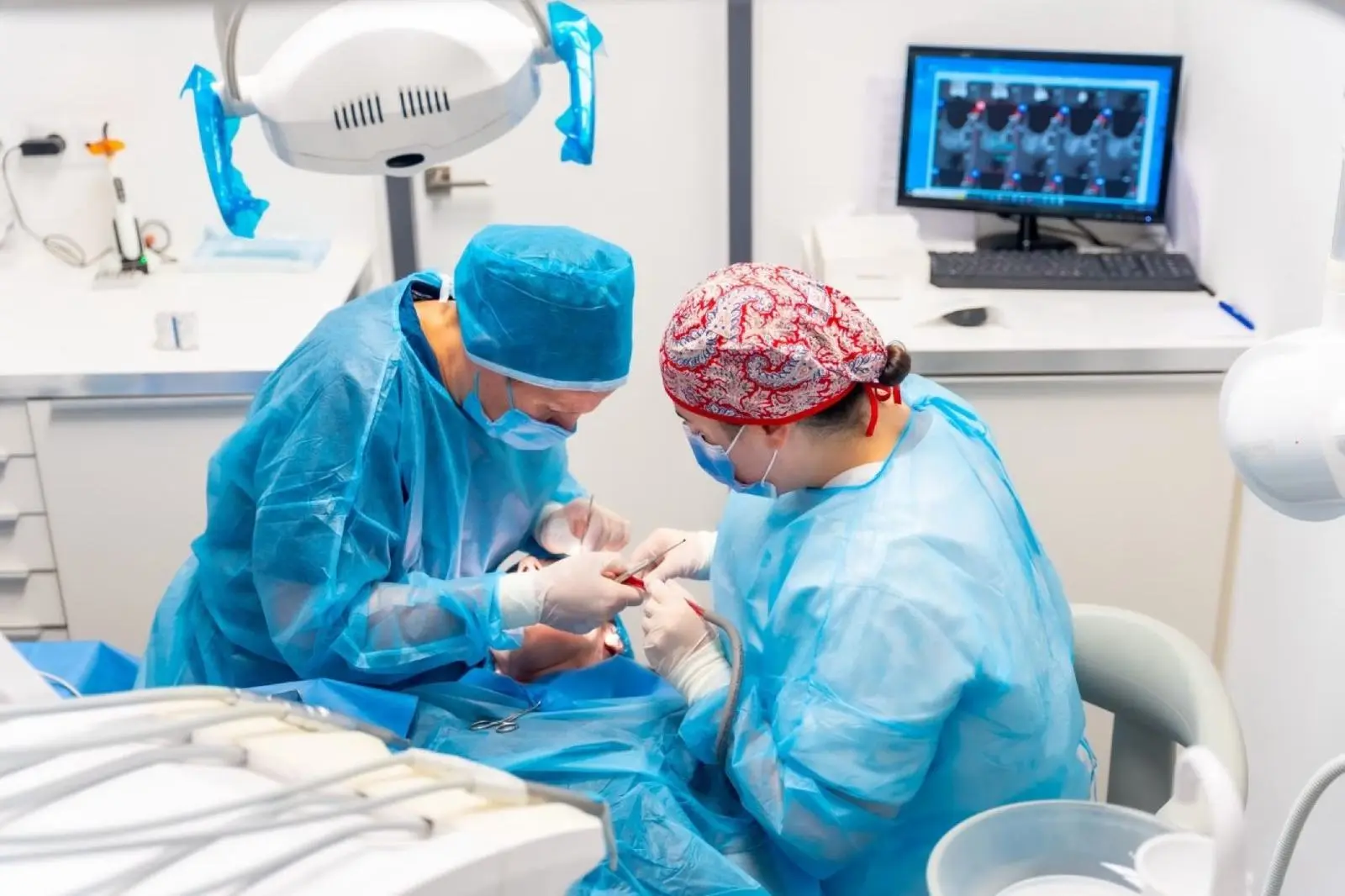
For surgical procedures Dental11 works with Dr. med. dent. Sofia-Maria Belouka. If a tooth lies close to the nerve of the lower jaw, or the procedure is demanding for other reasons, we assess the case first. If it makes more sense for you, we refer you to a specialised practice or clinic.
After the procedure
- swelling and limited mouth opening are common in the first days
- cool from the outside, do not apply heat
- soft food, no smoking, no sport in the first days
- do not rinse vigorously on the first day, so that the wound is left undisturbed
- please call us if pain increases or if you have a fever or renewed bleeding
Process
Step by step
Examination and X-ray
Discussion of findings, risks, alternatives and cost
Removal under local anaesthesia
Wound care, with a stitch if necessary, and instructions for home
Follow-up check and removal of stitches
FAQ
Questions about Wisdom Tooth Removal
Is wisdom tooth removal painful?
The procedure is done under local anaesthesia. You feel pressure and movement, but usually no pain. Afterwards, pain and swelling are normal for a few days. You receive a recommendation for a suitable painkiller.
What are the risks?
Swelling, renewed bleeding and impaired wound healing are possible. With lower wisdom teeth, sensation in the lip or tongue can in rare cases be affected temporarily or permanently. With upper wisdom teeth, an opening to the maxillary sinus can occur. We talk about your personal risk before the procedure, based on the X-ray.
Can all four wisdom teeth be removed in one appointment?
Under local anaesthesia the teeth on one side are often removed first, so that you can chew on the other side. We discuss with you how the appointments are split.
When can I go back to work?
This varies from person to person and depends on the extent of the procedure and on your work. Plan for rest in the first days. If you need a medical certificate, please tell us at the appointment.
Does health insurance cover the cost?
Basic insurance usually does not cover the removal of wisdom teeth. In certain cases defined by law it can be obliged to pay. We clarify this with you case by case. Instalments through Zahnärztekasse AG are possible.
Ready for the next step?
Book online any time or by phone during opening hours, Mondays and Tuesdays until 20:00.