
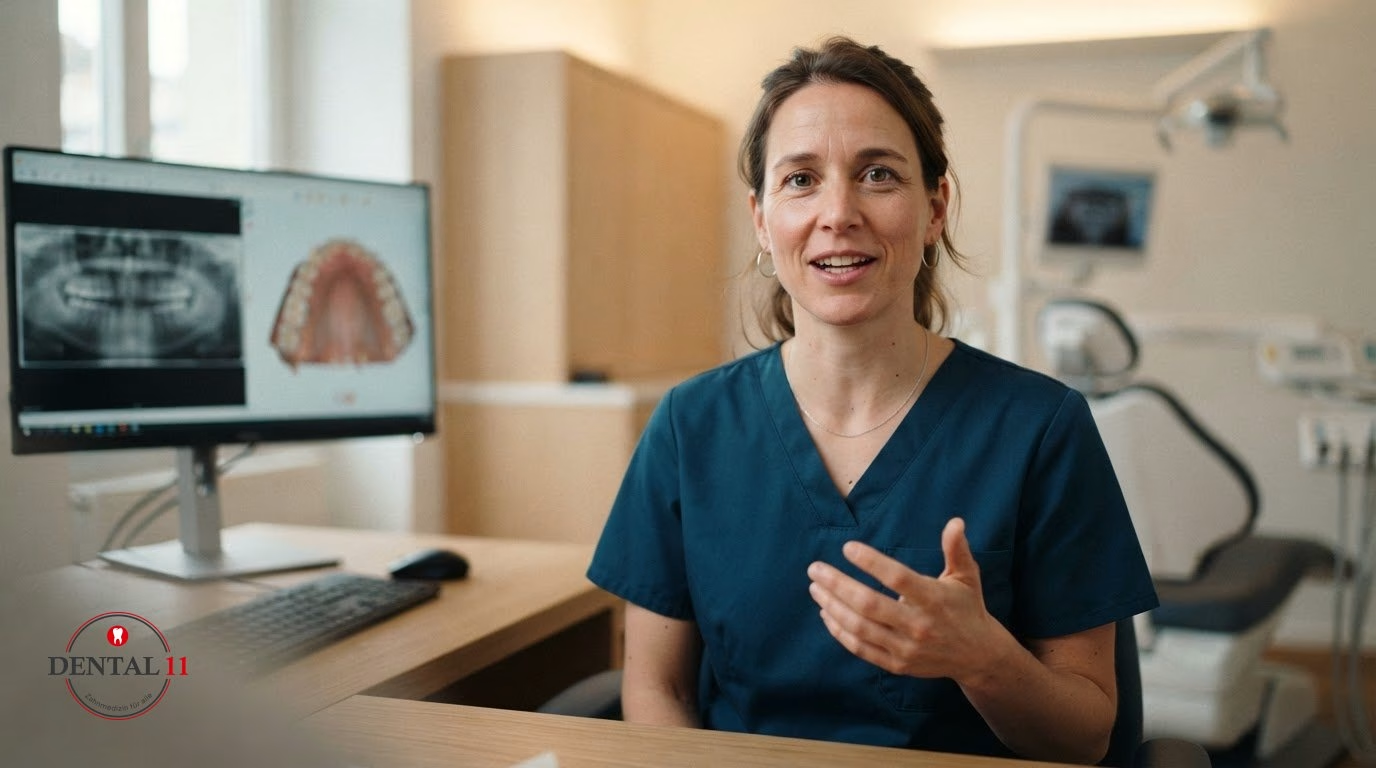
A treatment plan explained digitally in Zurich links findings shown on screen with clear explanations and proposals set down in writing. The visual presentation supports the conversation, but it does not replace the professional assessment of the examination results.
Here you can find out how individual treatment steps are discussed and documented. A common question: is a digital plan an automatic treatment recommendation? No. It records the options that have been discussed. Decisions are based on the examination and on the conversation you have together.
Key points
- Learn how digital views help to put dental findings into context during the consultation.
- Understand which individual factors shape treatment proposals and how options are discussed.
- See what kind of guidance a written treatment plan can give for the next steps.
- Get an overview of how digital treatment planning works, from discussing the findings to documenting them.
Showing findings on screen and explaining them clearly
A digital treatment plan links examination results with explanations that are easy to follow. Which records and examinations are needed for this? The basis is the clinical examination together with any existing, relevant findings. Further examinations depend on the specific question to be answered.
Explaining digital findings clearly
When digital findings are discussed, you look at the examination results together with the dentist and put them into context. Technical terms can be linked directly to the finding they describe. The dentist can point to individual areas and explain what can be seen there. This makes it easier to tell the finding apart from possible next steps.
An image replaces neither the conversation nor the examination. It serves as a shared basis for questions and explanations. Areas without any abnormality can also be put into context if they matter for the assessment.
How digital treatment planning works
Digital treatment planning arranges the examination, the discussion of findings and possible treatment steps in a clear order. First, the available information is reviewed. Then the relevant findings are shown on screen and explained in plain terms. After that, possible options and open questions can be clarified.
This order makes it clear what a proposal is based on and gives you the opportunity to have individual steps explained again. A treatment plan does not come from the on-screen presentation alone, but from the professional assessment of the findings.
A treatment plan does not automatically require every conceivable examination. What matters is information that fits the specific question. This includes findings from the clinical examination and existing records, as far as they are relevant to the assessment. X-rays are only taken if there is a reason for them. Whether an additional image makes sense depends on which information is still missing.
Existing X-rays and other dental records can be included in the discussion if they usefully complement the current findings. The digital presentation can highlight details, but it does not replace professional interpretation. A single image does not answer every question about the condition of a tooth.
Health data is considered particularly sensitive. In Switzerland, there are legal safeguards for this kind of data. A digital consultation is therefore not only about presentation, but also about handling personal information with care.
Individual proposals for a treatment plan
An individual proposal links the findings with possible treatment steps. Your dental health, any symptoms and your personal concerns are all taken into account.
How precise and reliable are digital treatment plans compared with conventional planning? A digital view can present findings clearly. How meaningful it is, however, depends on the examinations and on their professional assessment. The screen alone does not make a plan more precise or more reliable.
Does health insurance in Switzerland cover the cost of digital treatment plans? Digital planning and possible cost coverage are separate questions. As a rule, dental treatment is not covered by basic insurance; exceptions may depend on the specific circumstances. Supplementary insurance may contribute to the costs, depending on the policy. Check your policy or ask your insurer.
A digital treatment plan uses personal and medical information. This can include contact details, symptoms, examination results and relevant images. Health data is considered particularly sensitive and is protected by law in Switzerland. What matters is that this information is handled carefully and in a way that is traceable for the treatment.
What are the risks and limits of digital treatment planning? A digital view does not show every aspect of oral health. An image shows certain structures, but it replaces neither the clinical examination nor the conversation about your symptoms. Even a clear presentation needs professional interpretation so that a finding and its possible significance are not confused.
When possible steps are chosen, the findings and the treatment goal are considered together. A proposal can include different options, such as a treatment or monitoring over time. The purpose, possible burdens and alternatives are discussed. In the case of root canal treatment, this includes which findings support the proposal and which other options might be considered. This makes the reasoning easy to follow.
Personal concerns also count, for example questions about the order of steps, the timeline and the expected costs. These points are linked to the specific scope of treatment. A digital presentation can make differences between options visible. However, it does not replace an explanation of what these differences mean for your individual situation.
If you would like to discuss findings or possible treatment steps, you can book an appointment for treatment planning.
At the first appointment, the findings and possible treatment steps are discussed. Which options make sense depends on your individual situation. Questions about the order of steps, the timeline and possible alternatives can also be clarified.
The written treatment plan
If a dental check-up shows a need for treatment, a written plan provides a clear basis for the conversation. It records the proposals discussed and sets out possible next steps. In this way, the findings, the treatment goal and the approach stay linked. The document replaces neither the examination nor a personal explanation. A treatment plan explained digitally in Zurich combines the on-screen view with this written guidance.
Which details are included depends on the situation. The plan becomes easy to understand when it separates specific questions: which finding is relevant? What is the aim of the proposal? Which steps could be considered? Where there are several options, presenting them separately helps you to see the differences and open questions during the conversation.
- Finding: which tooth or area is affected?
- Proposal: which treatment is being discussed?
- Order: which steps should follow one another?
- Alternatives: which other options are explained?
- Costs: which expected expenses are part of the discussion?
Costs should also be discussed clearly. A written overview can bring together the planned scope and the relevant cost items. The amounts depend on the findings, the treatment steps, the materials and your personal needs. If the approach changes, the effect on costs should also be discussed. This allows a proposal to be assessed objectively without treating the plan as a binding price commitment.
A written plan also helps you prepare for your next appointment: the terms, options and open questions that were discussed are all in one place. For example, it can note whether a decision is still pending before treatment. If the findings or the treatment goal change, the plan can be explained again and adjusted.
In digital planning, the written version remains a guide, not a rigid scheme. Before you give your consent, the benefits, possible risks and alternatives should be clear to you. Questions about the order of steps or about individual wording also belong in the conversation. The specific details depend on the examination and on your personal situation.
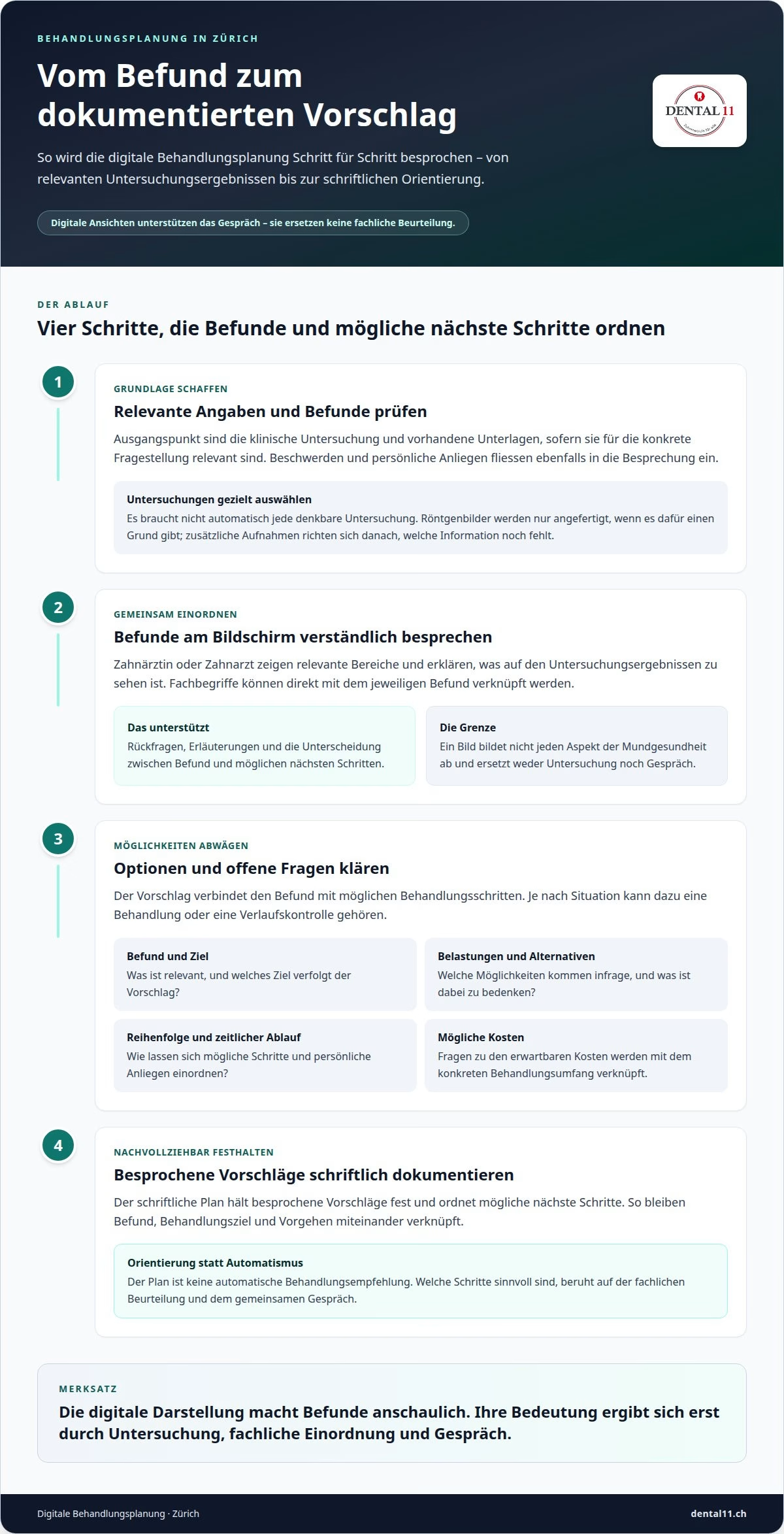
How does digital treatment planning work, step by step?
Digital planning breaks the decision down into clear steps. From your initial concern to the written summary, it remains clear what the proposal is based on.
- Clarifying your concern: first, symptoms and personal goals are discussed. One example is wanting to understand a change in a particular tooth. This establishes which question the examination should answer.
- Bringing findings together: next, the relevant examination results are organised. Existing images and information are included if they fit the question. This means the following steps are based on the same information.
- Interpreting the results: the findings are considered in relation to your concern. The dentist explains which observation matters for the planning. A visible abnormality is not automatically equated with a particular treatment.
- Discussing the options: suitable approaches are then explained, including their aims, possible burdens and alternatives. Where there are several options, the dentist explains how they differ and which questions are still open.
- Recording the approach: finally, the points discussed are set out in writing. These include the planned steps, their order and any decisions still to be made. This makes it possible to pick up from the same agreements at the next conversation.
This sequence links findings and decisions in a way that is easy to follow. If an important piece of information changes, the reasoning has to be reviewed again. A follow-up question can also influence the next step. The plan therefore remains a guide and does not automatically decide on a treatment.
During a consultation in Zurich, you can discuss the individual steps and any open points. Online booking is available to arrange an appointment for treatment planning.
If a dental check-up shows a need for treatment, patients receive a written treatment plan. Take time to go through the information calmly and check whether the proposed steps are clear to you. Note down anything that is unclear and any points you would still like to discuss. At the next conversation, you can ask specific questions and request an explanation. This helps you judge whether you can follow the proposed approach or still have questions. Even if you are not ready to make a decision yet, you can raise open points. Use the plan as the basis for an informed conversation and bring in your personal concerns.
Your treatment plan at Dental11 in Zürich Enge
At Dental11 in Zürich Enge, we show you X-rays and scans on screen and explain what they mean. Before any larger treatment, you receive a written cost estimate. A check-up currently costs CHF 99 instead of the regular CHF 199. During the consultation, questions about planning can be clarified and options can be discussed in relation to your findings. Digital images help us look at individual areas together; what matters is still the professional assessment of your situation.
Whether it is crowns and fillings, dental implants or preventive care and teeth cleaning, which treatment is appropriate depends on your findings and your personal concerns. Possible alternatives and the expected costs can also be discussed clearly. This allows you to weigh up the proposed steps calmly.
If you would like to discuss your findings or a treatment proposal, book an appointment at Dental11.
Approaching the next step with confidence
A treatment plan explained digitally in Zurich provides a basis for further conversations. Use it to clarify which goals matter to you and which questions remain open before a decision. The focus is then not on the technology, but on a treatment whose possible steps you can follow.
With dental implants, ClearCorrect aligners, crowns and fillings alike, it is important to understand a proposal in relation to your findings and personal concerns. Which treatment is suitable depends on the individual examination. Take time to consider the options discussed and to raise anything that is unclear.
If you would like to discuss your situation and find a possible next step, contact Dental11. An open conversation can help you sort through your questions and approach further planning calmly.
This article is for general information only and does not replace a personal dental examination.


